Table of Contents
What It Is
The course is roughly 30% AI Fundamentals (understanding the vocabulary and concepts behind LLMs) and 70% Vibe Coding Practice (tool exposure, prompting practice, building prototypes).
The second part covers:
- Tech stack setup: VS Code, GitHub, Claude Code deep dive
- LLM APIs and integration
- Two Sprints using Claude Code, n8n, Lovable, Instant, Supabase
By the end, you'll build a working AI-powered prototype from scratch and walk away with a foundational toolbox of vibe coding tools and the muscle memory to build.
Tools you'll use

Who It's For
Common Pain Points:
- Need to build, test, and ship prototypes, while improving communications with other functions, like engineering and design
- Meeting increasing prototyping and automation expectations at work but not sure where to start (see Aaron Levie's thread and Kaz Nejatian's thread)
- Have product ideas you want to build and ship but don't know how
- Frustrated with no-code tools like Lovable and want more control
- Tried to learn on your own but want accountability and a peer group to share ideas with
Course Vibes
Inside the Course:What Your Week Looks Like
Kickoff Call
Meet your cohort, get set up, and dive into your first challenge
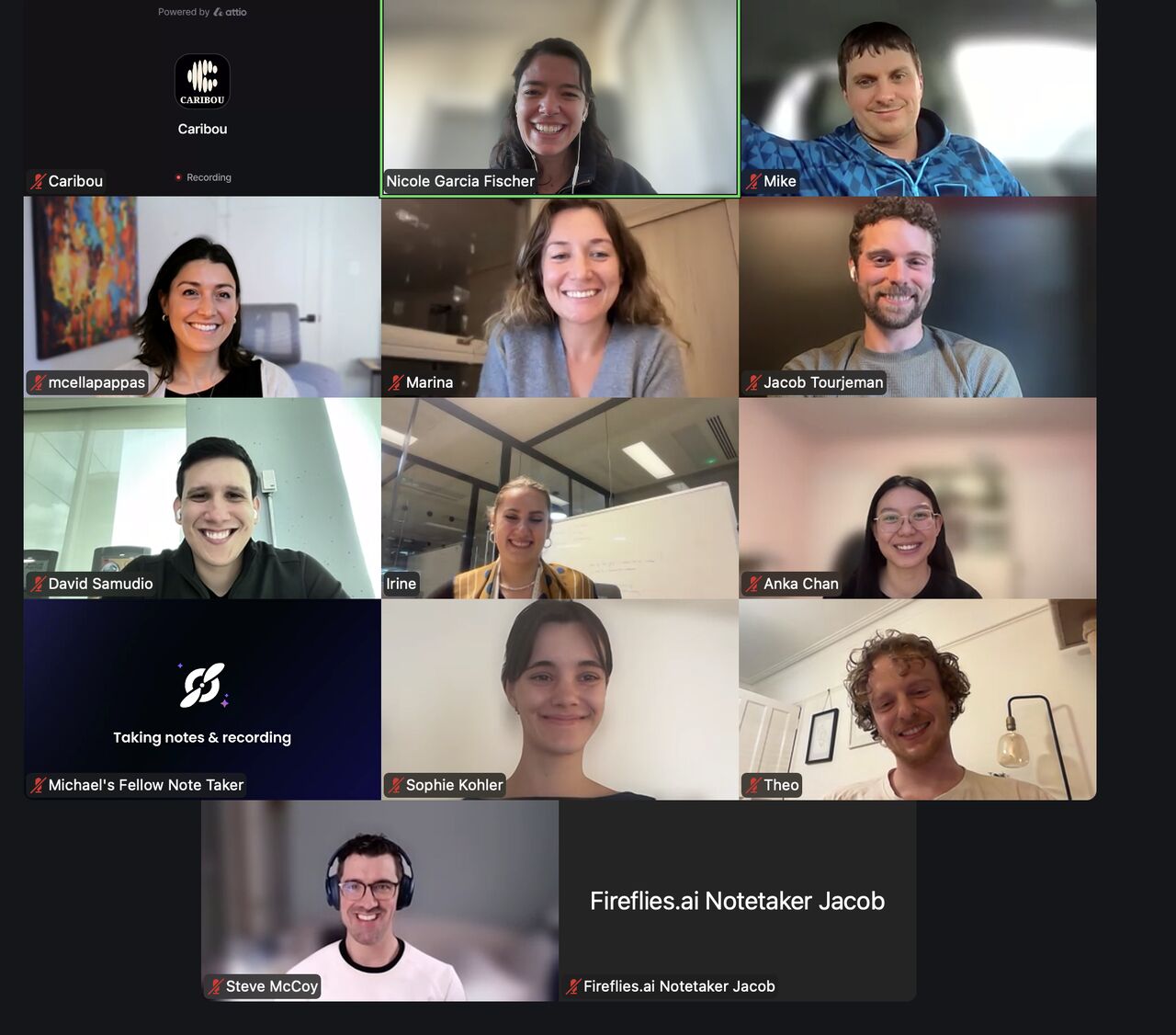
Cohort 2 kickoff — getting to know each other
Group Calls
Students share insights & present builds
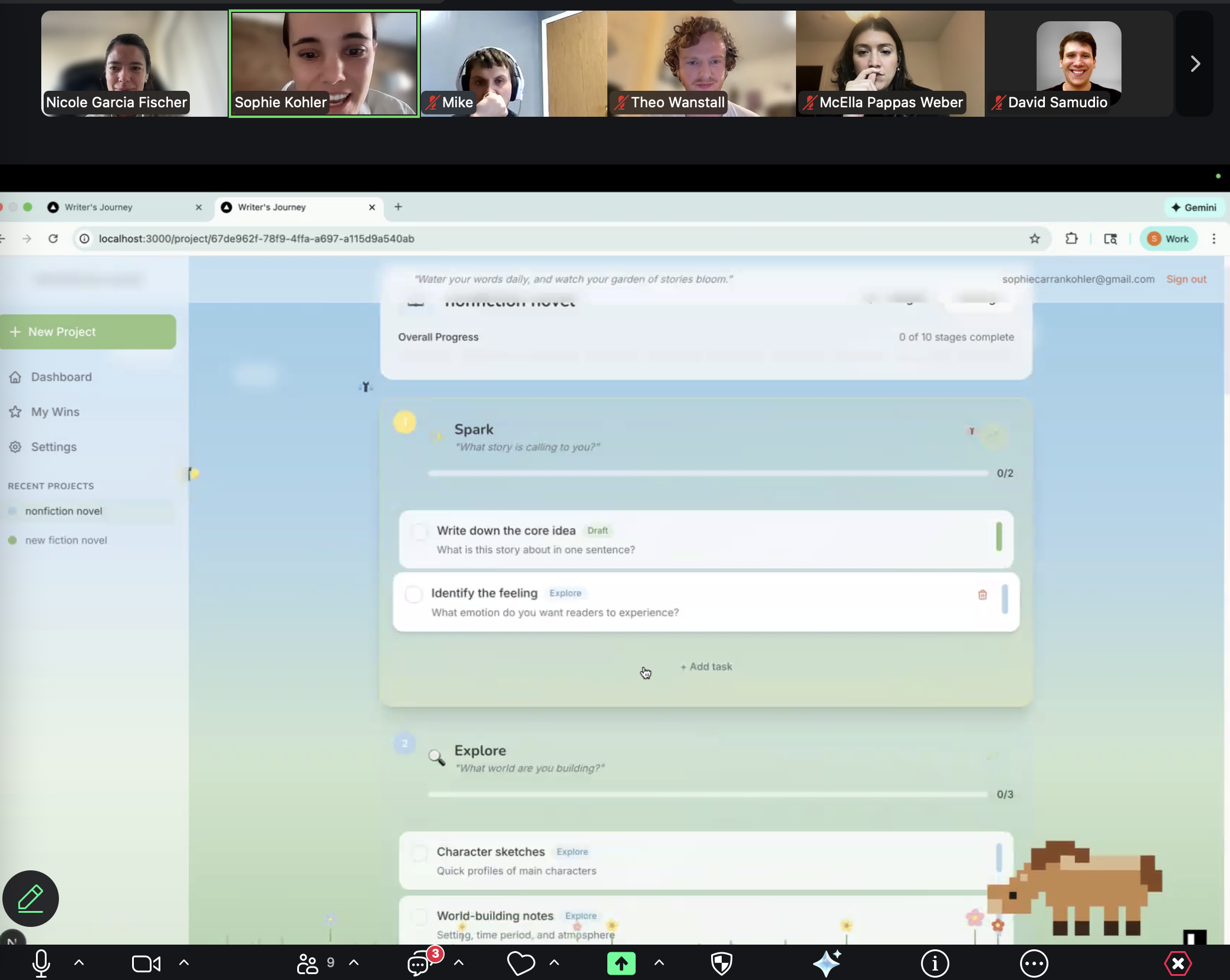
Sophie's first vibe coded project, complete with a database & animations!
Pair Programming Challenges
During Group Calls, we do pair programming challenges to improve muscle memory and show you want you can do in 30min!
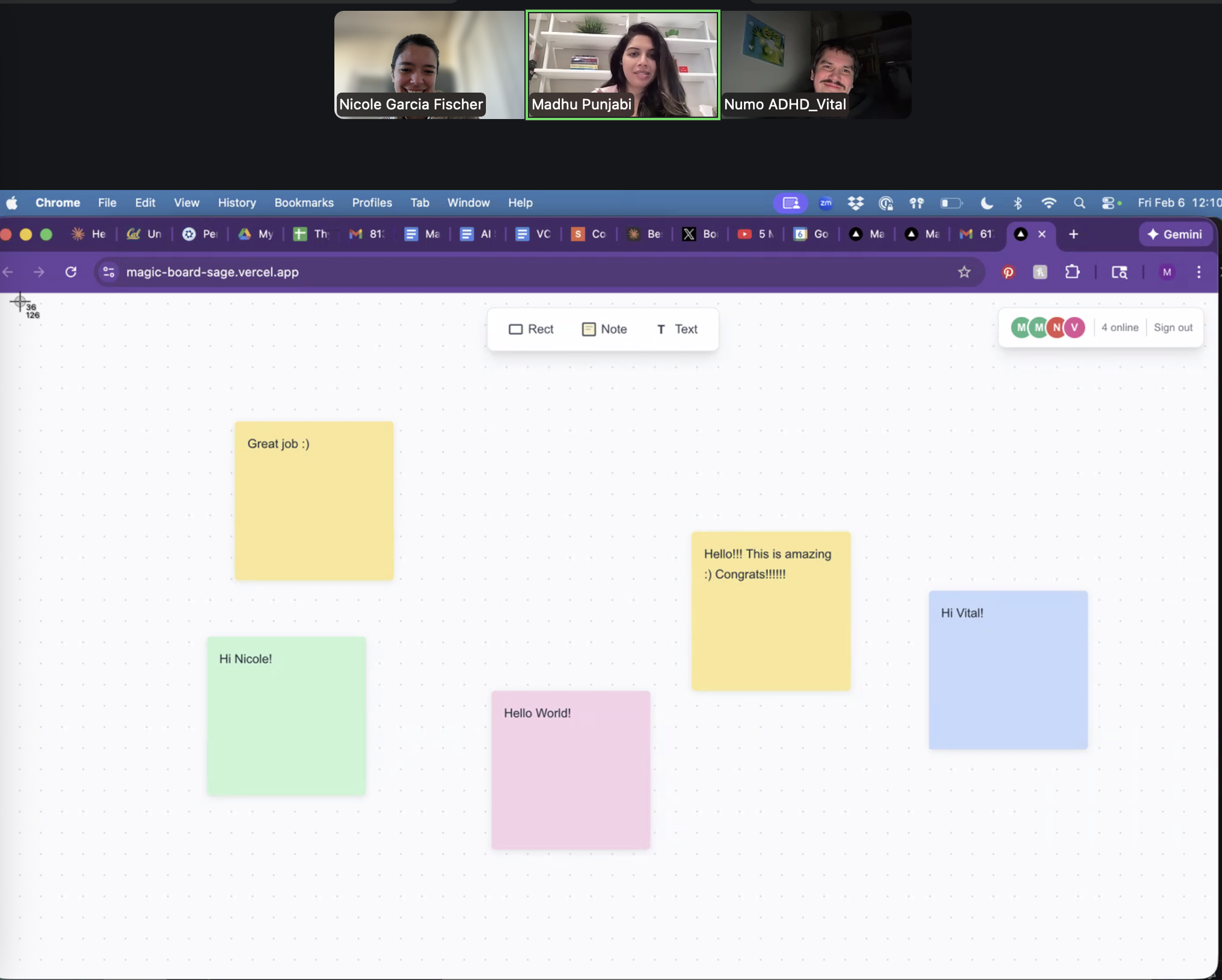
Pair programming challenge in action: build a live, multi-player board!
Guest Speaker Sessions
Learn from practitioners building with AI at the frontier
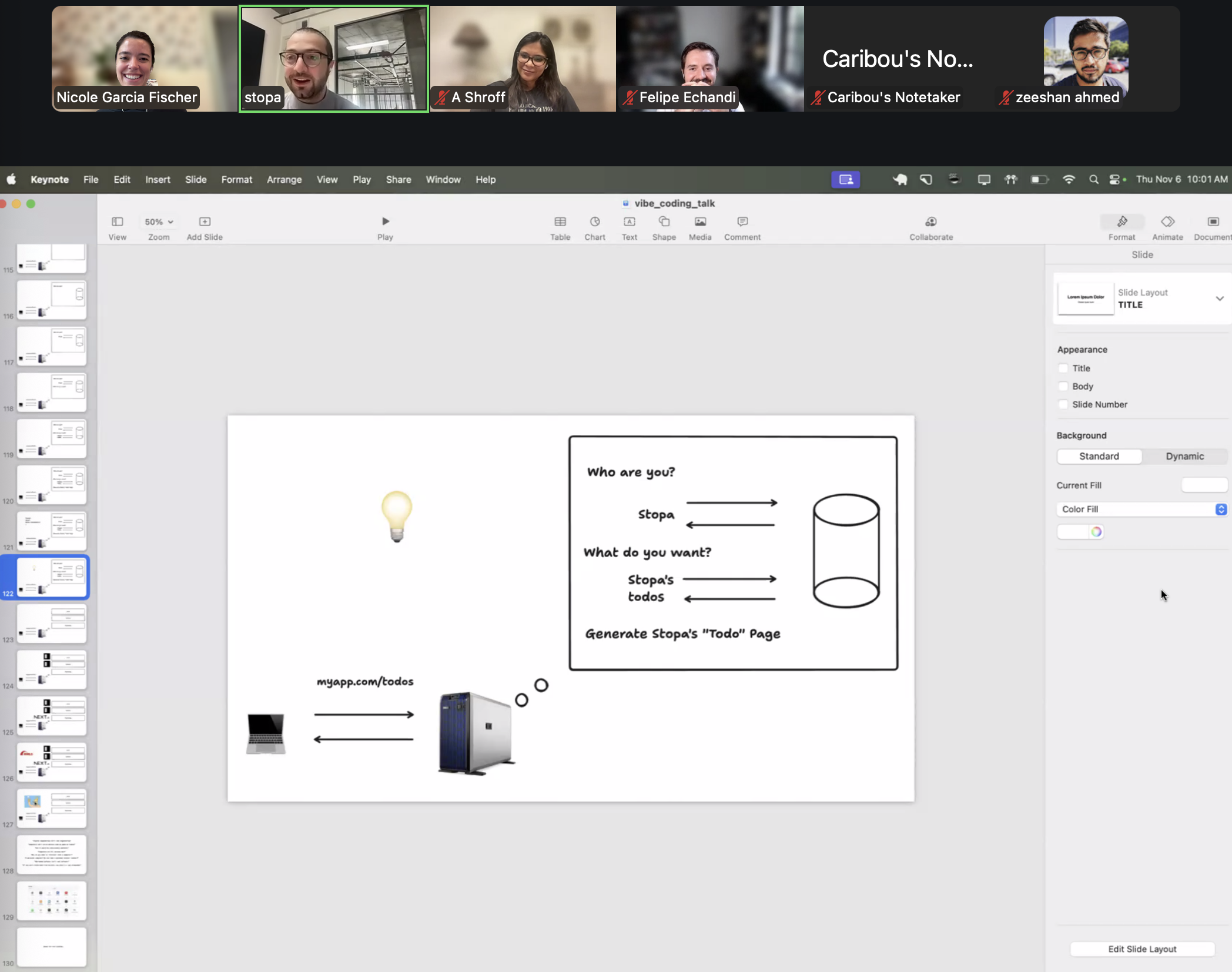
Stepan Parunashvili walking students through a history of programming and explaining how databases work
Final Project Presentations (a la 'YC Demo Day')
Ship a real product — your capstone to showcase what you built
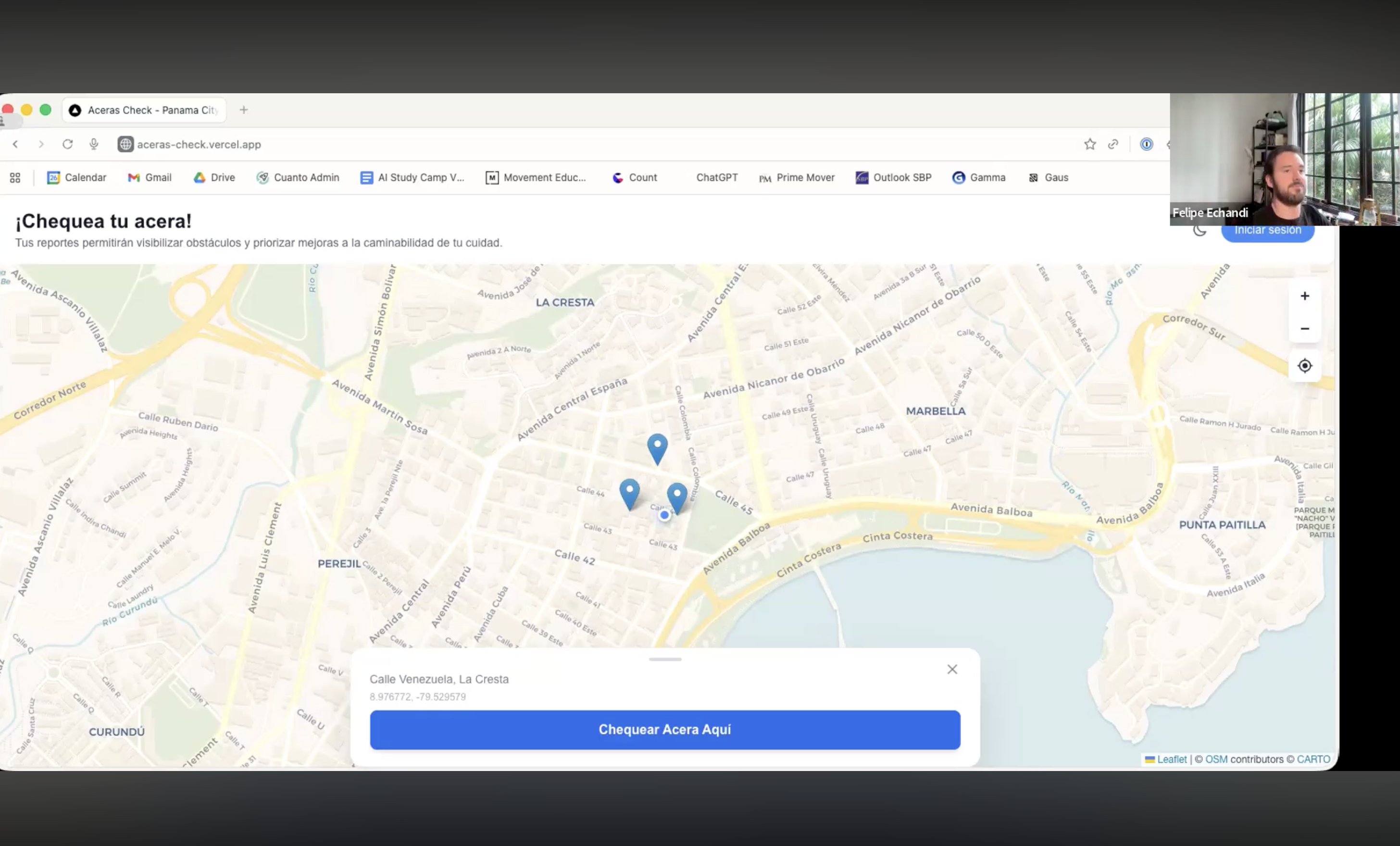
Felipe Echandi presenting his final project
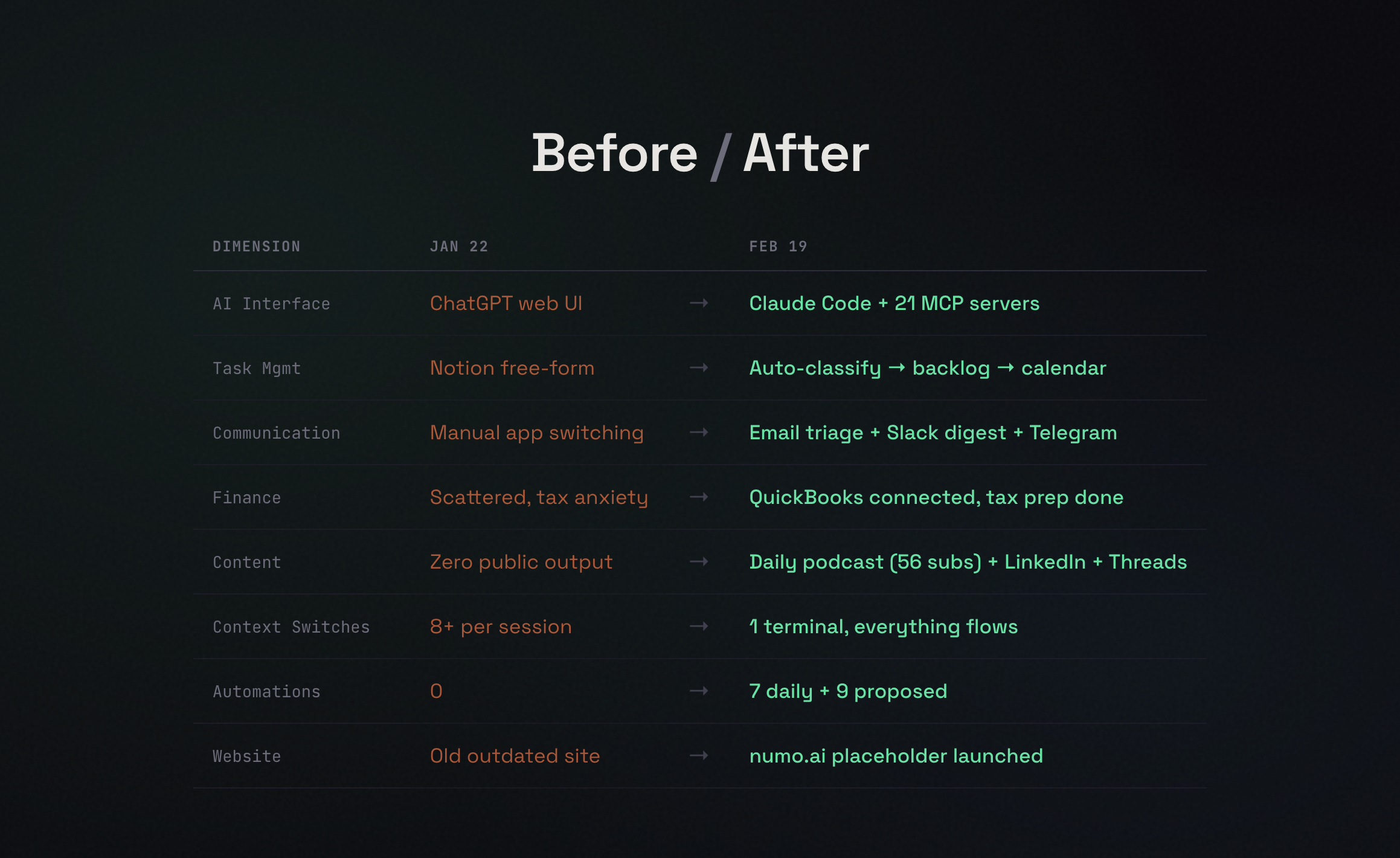
Vital Rozhevski showing what he learned pre and post Vibe Coding Foundations course
Office Hours
Weekly group office hours (in addition to 1:1 with instructors)
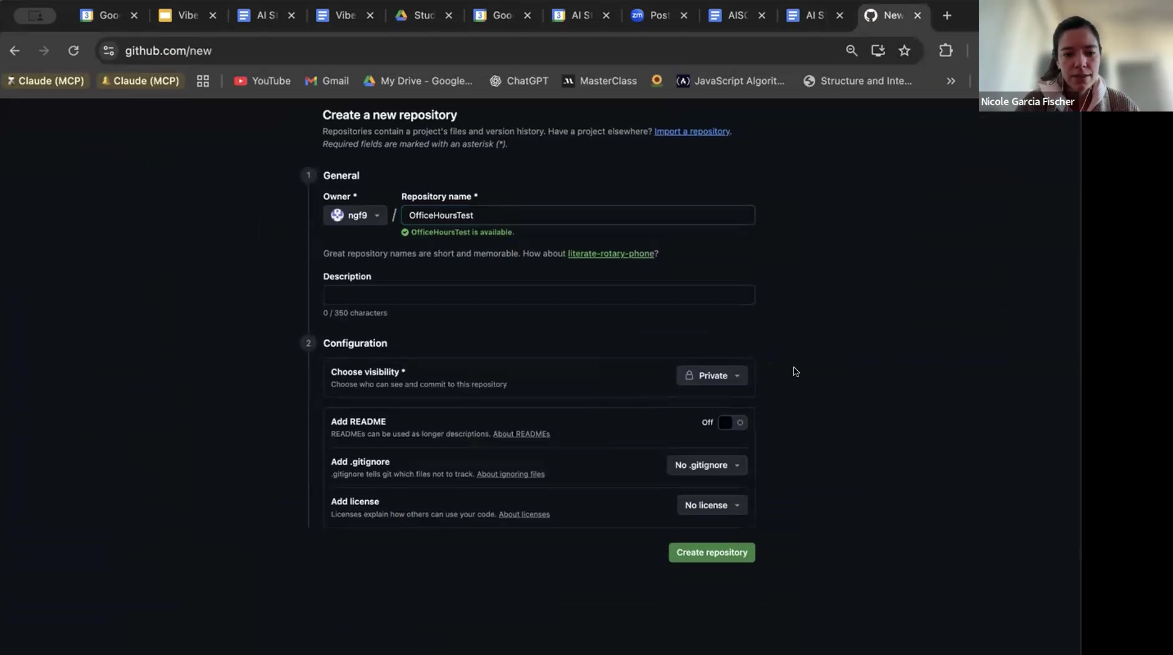
Nicole answering student questions and walking through how to deploy an app on Vercel
The Community
A global network of builders who keep shipping long after the course ends
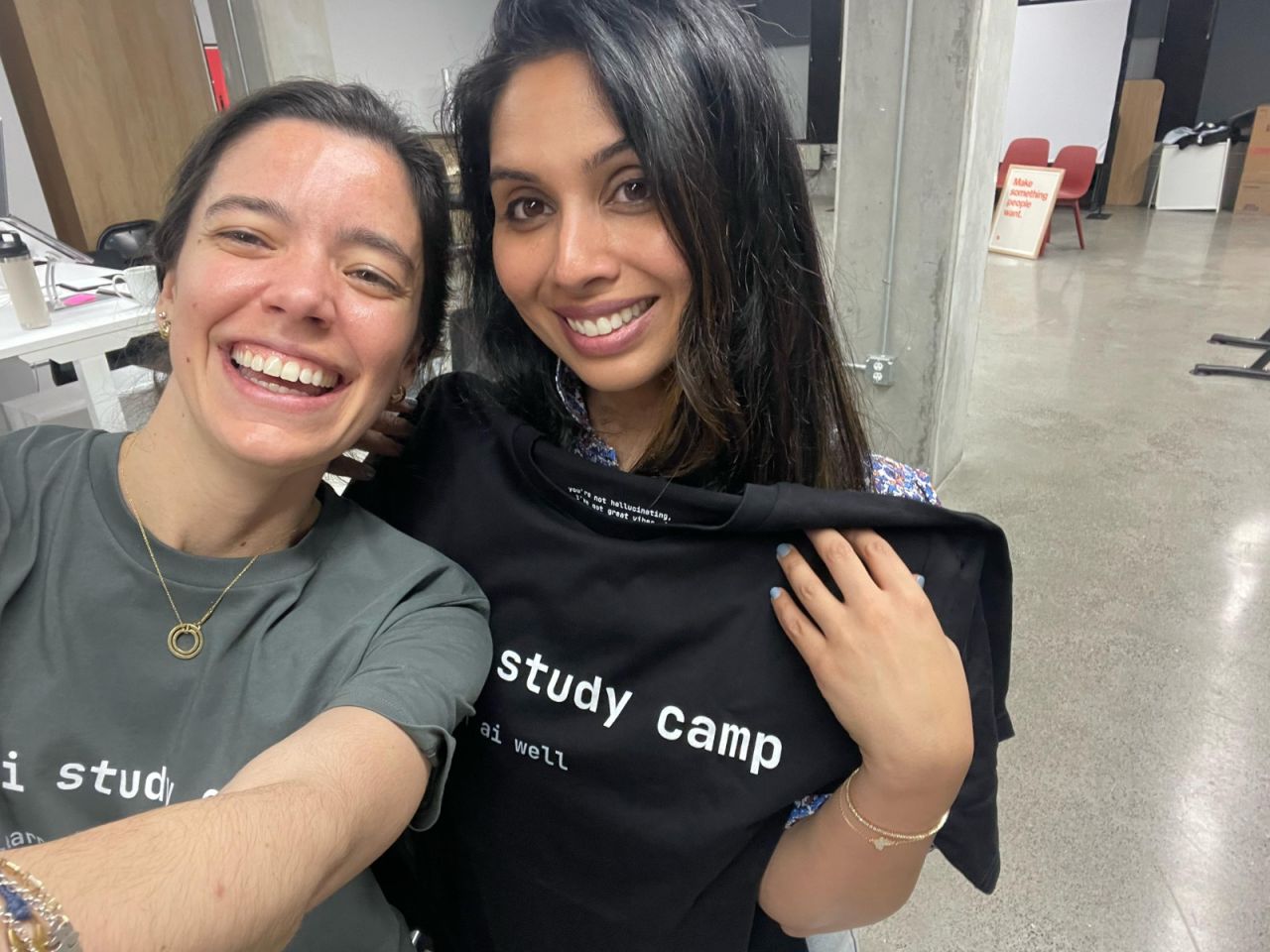
Madhu (student) and Nicole (instructor) meeting at a YC Vibe Coders meetup in San Francisco (+ repping cool AI Study Camp shirts!)
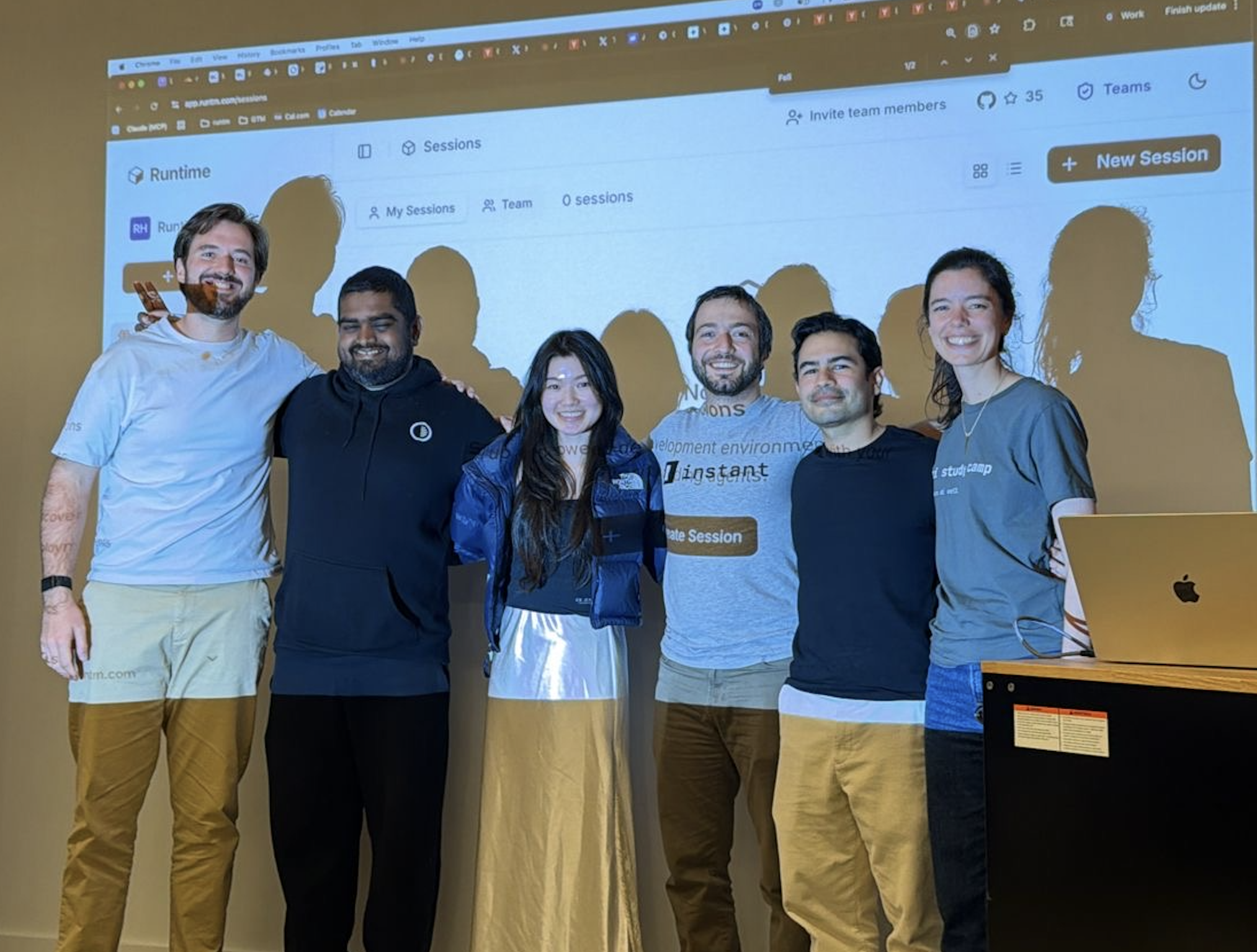
Partnering with Instant, Runtime, and Superpower to host our first Vibe Hackathon!
How It Works
- Small groups of 7-12 participants
- Structured curriculum, updated Oct 2025
- Non-technical background instructor who mastered vibe coding
- Guest speakers: Gordon Wintrob (Newfront CTO), Vaibhav Gupta (Boundary co-founder)
- Evidence-based learning: active recall, spaced repetition, metacognition
- Async assignments + group accountability calls
- Two integrated vibe coding sprints
- Final week: course project launch
Outcomes
By the end of the course you will have:
- A compounding toolbox of skills like setting up and using Claude Code, calling LLM APIs, building automations with n8n, and debugging in the terminal
- A launched prototype — an AI-powered web app you can show and demo
- A repeatable methodology — a structured approach to starting projects, unblocking yourself with Claude Code
- An understanding of how LLMs work — including use cases and where they're fallible
Example Student Final Projects
Felipe Echandi — Cuanto CEO (YC)
Sidewalk identification app with open-source maps API, geolocation, file storage, authentication, and LLM-powered health ratings. Implemented sub-agent personas for different coding tasks.
Ben Stephens — Caribou, Head of People
Candidate screening/ATS tool that parses resumes, evaluates against role-specific skills, generates fit scores and skill breakdowns with dynamic role configuration.
Juan Andrade — Caribou Founder
Voice-to-text Discord bot for Age of Empires strategy questions mid-game.
Vital Rozhevski — Numo.ai Co-Founder
Built a Claude-powered “Personal Operating System” running his life through 2 apps (20+ MCP servers, 60+ custom skills, 500+ automations); he even launched a Ukrainian AI newsletter with 60+ subscribers.
Sajag Agarwal — YC Alumn
As a non-technical founder, he shipped 2 months of production code in 2 days: rebuilt large-file uploads, migrated data models, overhauled design system, and cleaned legacy code.
McElla Pappas Weber — Head of Talent, Invert
Built InvertVest, an equity education and simulation portal helping startup employees understand vesting, value scenarios, and options in plain language.
See more outcomes here.
Student Reviews
Half my team has done this now and I’m going to make it mandatory for non-technical folks as it’s elevated our product and technical convos. Strong recommend.

Juan Andrade
Founder, Caribou (YC W19)
As a generalist founder, I've been wanting to develop the capacity to autonomously build software and collaborate with my technical team at Cuanto. I incrementally learned some tech skills (HTML/CSS, SQL, bash, etc.) as time allowed. I joined the first cohort of the Building with LLMs course (ie Vibe Coding Foundations!) at AI Study Camp and I feel I obtained a new superpower in just 5 weeks: I can build software. I'm obviously starting on this journey and have much to learn, but the curriculum put together by Vasili Shynkarenka and Nicole Garcia Fischer was absolutely fantastic. It starts with a strong overview of how LLMs work (which took me down Andrej Karpathy's amazing explanations) and continues with super practical pair-programming sprints, amazing guest presentations (Stepan Parunashvili and Thiago Monteiro's were awesome!) I also managed to reconnect with Juan Andrade (fellow YC founder and old friend) and make new ones friends to learn together! If you are looking for a qualitative step-function change rather than incremental learning, check them out!

Felipe Echandi
Co-founder & CEO at Cuanto (YCW19)
I started this program with AI anxiety and finished with AI optimism -a shipped product that real users are testing. As a consultant, I always felt the gap between what surveys measure and what people actually mean, so I built an AI research tool that gives you interview depth at survey scale. I learned the stack, got comfortable in the terminal, and built it myself. Bonus: no developer required!!
David Samudio
Experience Design, Banistmo
See more reviews here.
Syllabus
-
Week 1: AI Fundamentals — LLM theoretical foundation and use cases
-
Week 2: Vibe Coding Foundations + Sprint 1 — Dev environment setup, first web app build
-
Week 3: Deep Dive with Claude Code — AI-powered development foundations
-
Week 4: LLM APIs & Automation + Sprint 2 — Augmented LLMs, evals, n8n AI Insights Generator
-
Week 5: Launch & Demo Your Prototype — Demonstration and shipping
Check out the one-page syllabus here.
Logistics
- fully remote
- 5 weeks, ~1-2h a day to make sure it really sinks in and make progress on projects
- 60% async (reading, watching, tinkering, assignments, etc.) and 40% live (speaker lectures, group discussions, office hours)
- live lectures and group calls are on Thursdays and Fridays at 9 am PT
Note: you really need to allocate at least 1h per day to the course, otherwise it won’t work. As I like saying, “1h a day or stuff fades away.” Karpathy explains why in this twitter thread.
Why Claude Code
Three primary reasons:
- It teaches programming concepts — requires deeper engagement with build approach, UX/UI, databases, APIs
- Finer product control — more control than Lovable for building what you actually want
- Transferable skills — learning Claude Code makes other vibe coding tools easier to adopt
Instructors
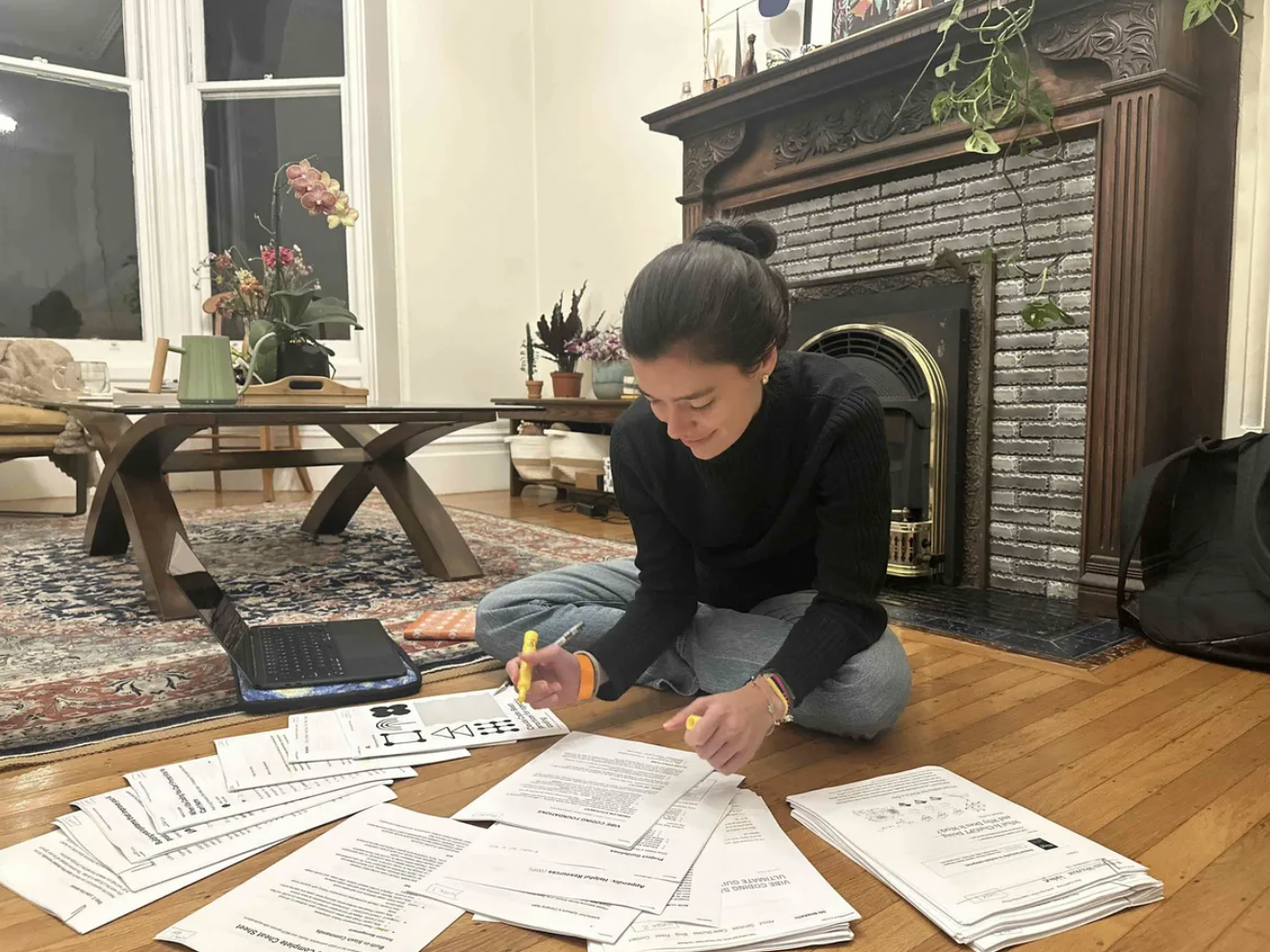
Nicole Garcia Fischer — Main Instructor
7-year bizops background. Built 0-to-1 processes for a 2000-person company. In 2025, vibe coded from zero programming background: launched two App Store apps (Go Deeper, Inspirations App), built multiple websites (including the website you're currently viewing!). AI Study Camp alumna. Duke graduate. Focus: Vibe Coding.
Pricing
$4,000 per seat. 20% off for multiple seat purchases.
How to Sign Up
Fill in a quick form and we’ll be in touch in ~24h.